Anyone working in PR and communications will have noticed how quickly the media landscape has changed over the last decade. There are more channels vying for our attention than ever before, and this fragmentation has fundamentally changed the way we consume news content.
According to research from Reuters, 54% of people in the U.S. are now getting their news from social and video networks; more than any other media type, including online, TV, and podcasts.
If audiences are spending more of their time on social media, and brands are becoming more time- and resource-stretched, where exactly should PR teams be focusing their social media efforts? It’s a question that’s always on our minds, and thanks to joint research from Cision and GWI, we’ve been able to find some answers.
The Ubiquitous Four
Our research looked into daily usage across the major media platforms and found that four social media networks jumped out in terms of traffic and usage: TikTok, Facebook, Instagram, and YouTube.
A staggering 85% of people use at least one of these platforms every single day, making these social channels ubiquitous among content consumers. The chart below shows the scale of popularity for these four platforms, with others bracketed into “common” (including online, X, and podcasts) and “niche” (including Reddit, Snapchat and LinkedIn) daily usage.
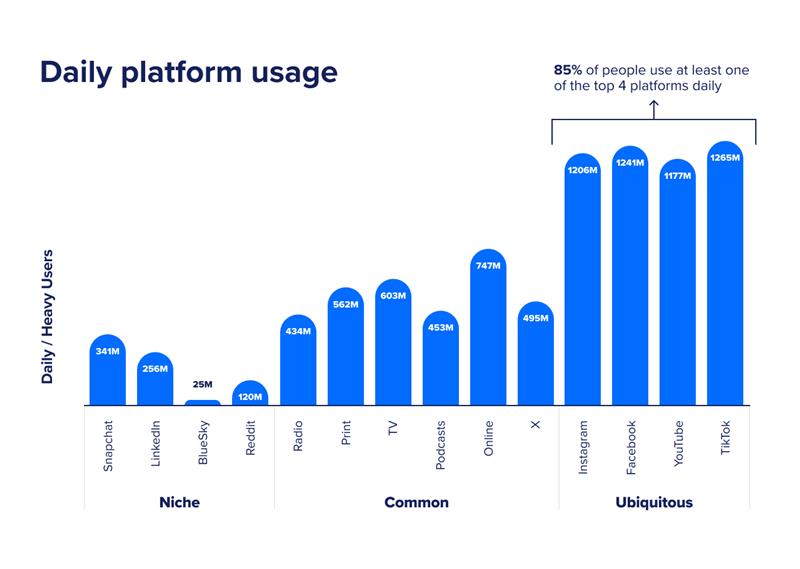
What does this data on “the ubiquitous four” mean for PR teams? If they want they want to build brand awareness, then TikTok, Facebook, Instagram, and YouTube aren't just good places to start, they’re essential.
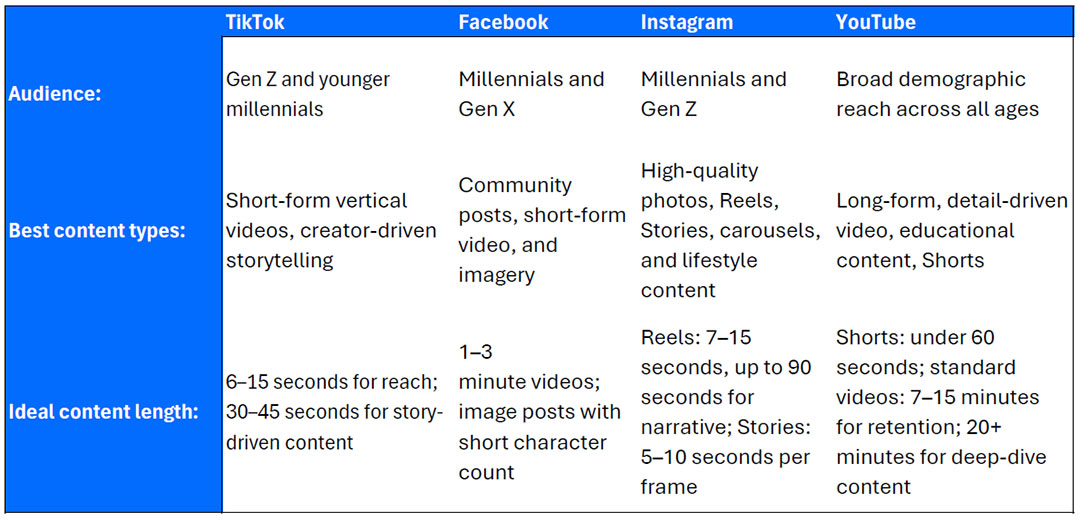
With these channels leading the way, it’s also worth rethinking not just where you post content, but how you create that content. Social media can’t be an afterthought; the onus is now on PR pros to put it front-of-mind in campaigns. However, each of the ubiquitous four platforms have different strengths and audiences. Here’s a quick look at how each differs:
Thinking Beyond the Big Four
Even though our common and niche platforms can’t match the daily usage of the top four, they offer something equally valuable: focused audiences with higher engagement and less competition for attention.
In fact, niche platforms often deliver more meaningful interactions because there's less noise to cut through. What matters is matching the right message to the right audience on the right platform.
Take Snapchat, for example. Our data shows it's the most female-focused platform we examined, making it ideal for brands targeting younger women. Meanwhile, X and Reddit skew heavily male, offering concentrated access to those demographics.
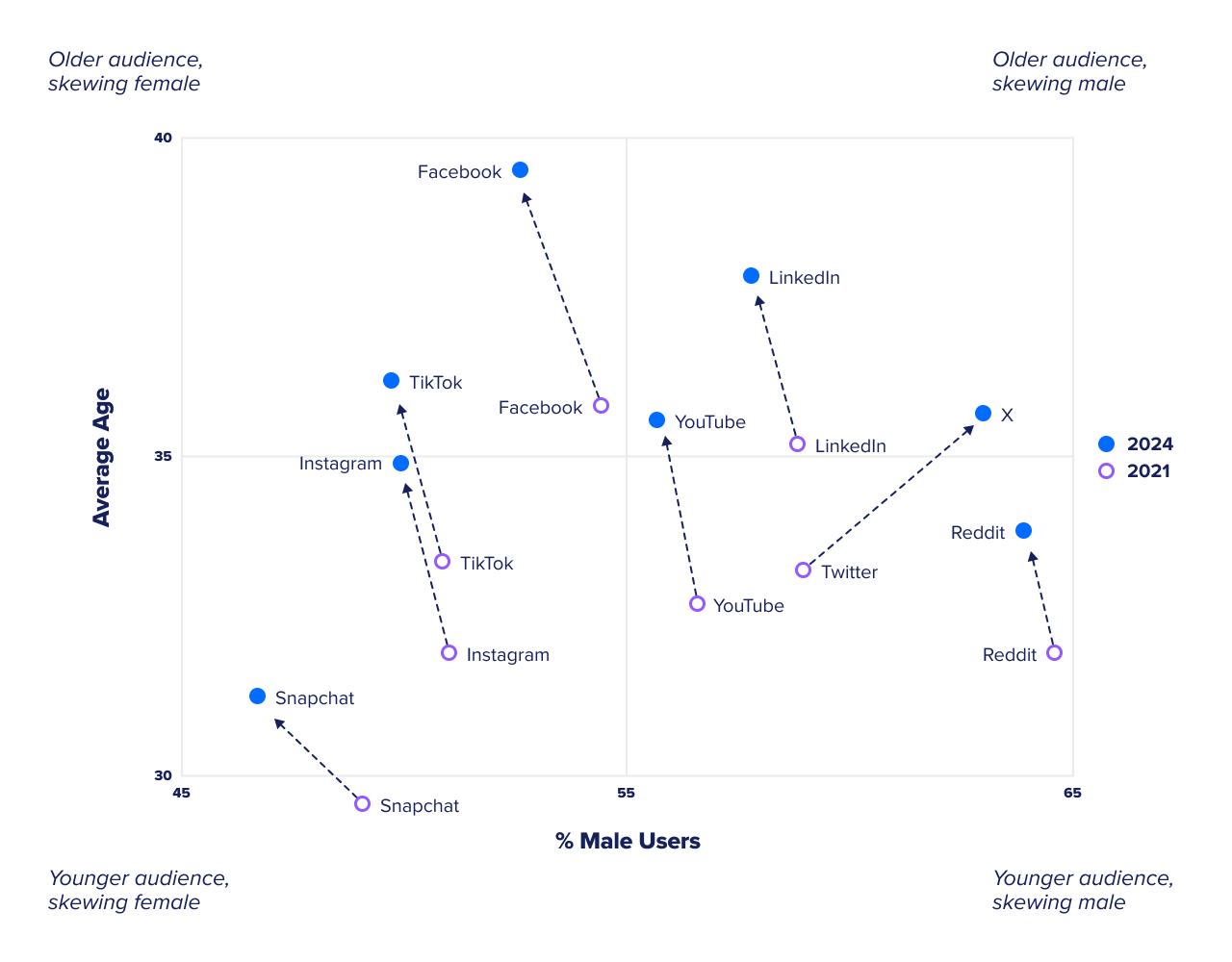
Audiences across all platforms are getting older, with Facebook and YouTube experiencing the largest average age increases over a three-year period. This shift may create opportunities on emerging platforms where younger users are migrating.
The ideal strategy? Don't abandon the big four, but don't rely solely on them either. It’s worth thinking about a hybrid strategy that combines one or two major platforms for broad reach with one or two niche platforms for targeted engagement.
This approach lets you maintain visibility where your audience spends most of their time while building deeper connections in spaces with less saturation.
The Top Social Platforms for Media Relations
As well as thinking about who consumes the news across social media, PR pros need to consider who is creating that content as part of their social media strategy.
According to Cision’s 2025 State of the Media Report, our survey of more than 3,000 journalists worldwide, 96% of respondents told us they use social media for professional purposes. Yet of the “ubiquitous” four platforms, most reporters are only using two: Facebook and Instagram.
Reporters are behind general audiences in their adoption of YouTube and TikTok, suggesting these platforms may not yet be optimal channels for media outreach, though that is evolving as newsrooms adapt to changing content consumption habits.
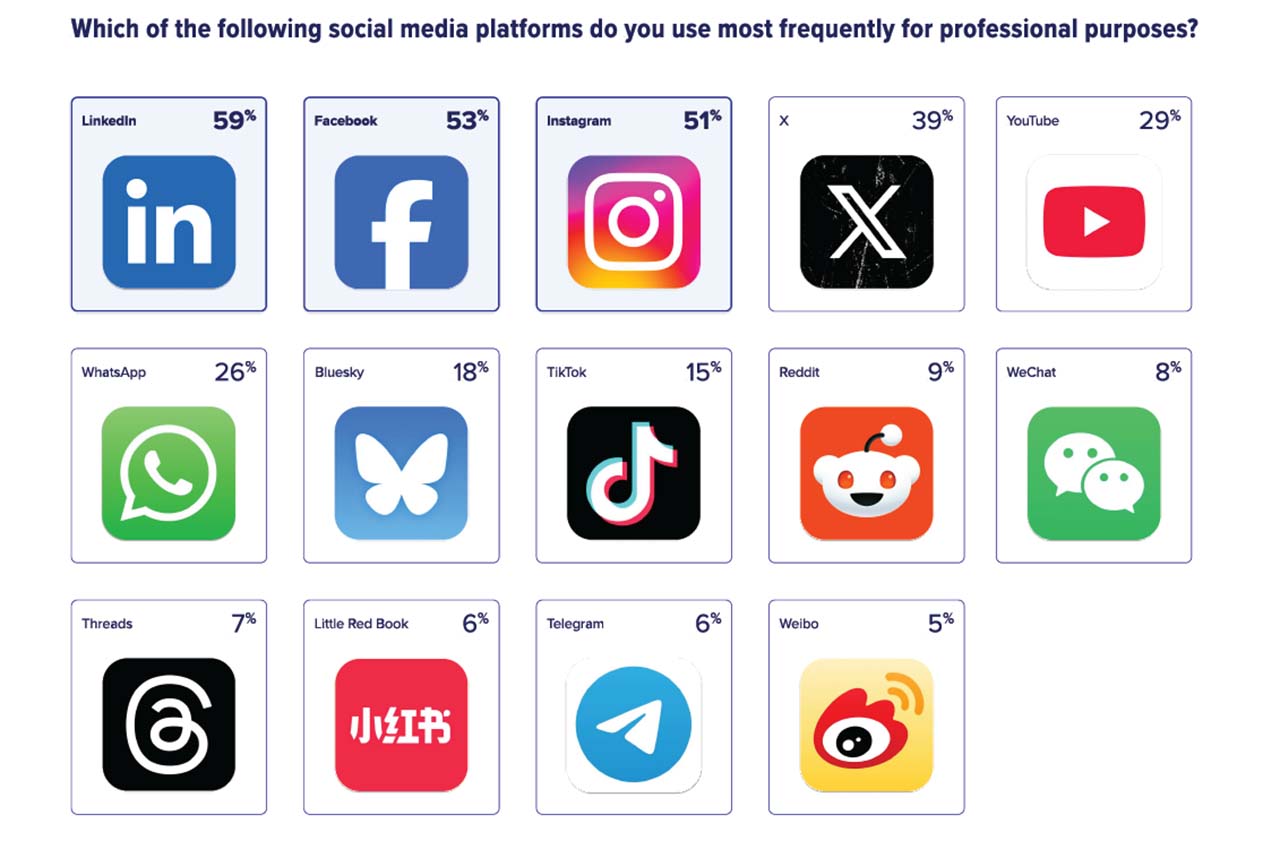
Though X is behind the top four in terms of daily usage, it’s still significant for journalists with 39% using it for their work.
When building your social media strategy, it’s critical to think beyond consumer reach alone. Journalists, industry influencers, and decision-makers are some of your key stakeholders, so where are they most active and engaged?
Connecting with journalists on their preferred platforms creates relationship-building opportunities that complement traditional media outreach. For a deeper look at how journalists use social media, take a look at our data-backed explainer.
3 Social Media + PR Platform Tips
Social media has completely changed how audiences consume and news and PR professionals need to react appropriately. For teams navigating this fast-shifting environment, three big thoughts stand out.
- Meet audiences where they are, not where you think they are (or where you want them to be). Move beyond assumptions about social platforms and let data guide your strategy. For example, if your target audience is most active on Snapchat or Reddit, then that's where you need to be. Leverage social listening tactics and tools (like CisionOne) to understand where your target audiences are most engaged and what type of content they’re engaging with.
- Navigate the journalist-audience gap carefully. While 96% of journalists use social media professionally, there's a notable disconnect between where reporters spend their time and where audiences are most active. This gap means PR teams can't always rely on traditional media relations to reach their audiences, underscoring the importance of a balanced social media strategy.
- Social-first isn't optional anymore. Social media is no longer just a distribution channel. Instead, PR teams must rethink their entire content creation process, building campaigns with social as a primary destination. This means understanding each platform's unique requirements, and crafting content that resonates within each ecosystem.
Dive Deeper
For more insight on the shifting media landscape, listen to my full discussion about the research – and its implications for PR teams – on the Cision Deep Dive podcast. Stay tuned for future podcast episodes addressing social media trends and PR’s biggest challenges, priorities, and opportunities for 2026.
Additional Resources for Social Media and PR
- The 5 W's of Social Listening for PR
- Four Ways to Improve Your Social Media PR
- The Complete Guide to Social Listening for PR
Find out how CisionOne can help you track the full media environment, from monitoring to social media and media outreach. Speak with one of our experts.
Most Recent Posts
Cision Resources
-
E-books and Guides
Comprehensive how-to guides on strategy and tactics
-
Case Studies
What are other brands doing – and how can we learn from them?

About Barnaby Barron
Barnaby Barron is Head of EMEA Analysis at Cision, where he leads a team of over 50 consultants delivering industry-leading communications evaluation for some of the world’s largest companies. With a Master’s in Physics from Cardiff University and more than a decade of experience in PR and communications, he has managed global programmes and advised organisations on social listening, audience understanding, and strategic decision-making. Barnaby is driven by curiosity, collaboration, and a desire to make complex information accessible, actionable, and genuinely useful for decision-makers.